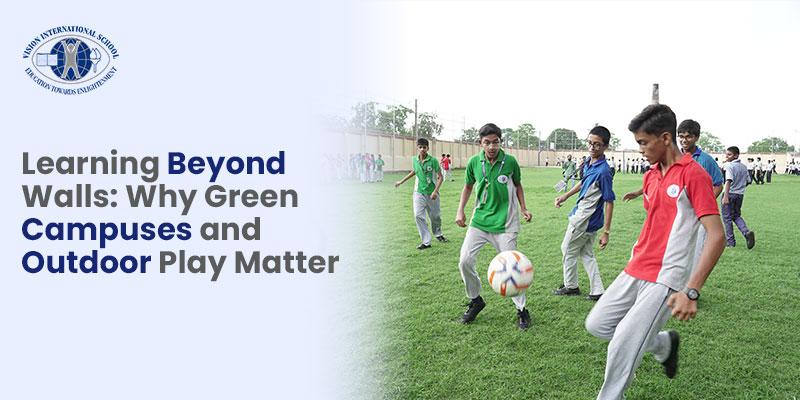
Children today are growing up in a world shaped by digital screens, fast-changing technology, and increasingly structured routines. Yet, some of the most valuable childhood experiences still happen away from screens. A walk beneath the trees, a game on an open field or a lesson inspired by the natural world can offer children meaningful ways to explore, learn and grow. For children growing up in an increasingly connected digital age, access to green spaces and outdoor play is becoming an important part of a balanced school experience.
Research also highlights the value of learning beyond traditional classrooms. A 2022 systematic review published in Frontiers in Public Health examined 147 research studies on nature-based outdoor learning. It found that outdoor learning can improve student engagement, encourage collaboration, support social development and contribute to students' overall well-being. Read the research here.
This blog explores why nature-based learning matters for today’s children, how green campuses and outdoor activities support children's development, and why the school environment plays a vital role in creating a well-rounded educational experience.
Why Does Nature-Based Learning Matter for Today’s Children?
Children today are growing up with smart devices, digital classrooms and instant access to information. While technology has opened new learning opportunities, children also need time to move, interact and explore their surroundings. Nature-based learning creates this balance by connecting everyday experiences with the world outside the classroom.
A green, spacious school environment can encourage children to observe their surroundings, ask questions, and develop a natural interest in learning. For example, watching plants grow can introduce young learners to basic science, while observing changing weather can help them understand seasonal patterns.
More importantly, outdoor experiences allow children to learn through direct interaction instead of relying only on textbooks and digital content.
How Green Campuses Support Children's Holistic Development
A school's surroundings can influence how children feel, interact and participate in everyday activities. Open spaces, greenery and well-maintained outdoor areas can make the school experience more engaging.
Here are some important ways green campuses can support children's growth:
- Encourage Curiosity and Observation: Natural surroundings can give children opportunities to notice small details, ask questions and understand how the world works. These experiences can strengthen observation skills and encourage scientific thinking.
- Support Physical Development: Outdoor play allows children to run, jump, stretch and participate in sports. Regular movement helps develop balance, coordination, strength and motor skills while encouraging an active lifestyle.
- Build Social Skills: Group games and shared outdoor activities teach children to communicate, cooperate and respect others. They also learn to follow rules, manage disagreements and work towards common goals.
- Promote Emotional Well-being: Spending time in open and green surroundings can offer children a refreshing break from structured classroom routines. It may help them feel more relaxed and return to their lessons with renewed attention.
- Develop Environmental Awareness: Children who regularly interact with nature can become more aware of plants, animals and the importance of protecting the environment. Simple observations can gradually encourage responsible habits.
Outdoor Play is More Than Just Recreation
Play is an essential part of childhood, not simply a break between academic lessons. When children participate in outdoor games, they develop skills that support both their personal and academic growth.
For instance, team sports teach cooperation, discipline and leadership. Running games help improve physical coordination, while activities that involve planning and strategy encourage quick thinking. Even unstructured play can give children the freedom to make decisions, solve small problems and express themselves.
Outdoor play also allows children to interact with classmates beyond formal classroom settings. These shared experiences can help them form friendships and develop a stronger sense of belonging. For children growing up in an increasingly digital world, such opportunities are especially valuable. A balanced school routine should therefore make room for digital learning, academic development and active outdoor experiences.
Vision International School: A Campus That Makes Room for Growth
A meaningful school experience depends on more than well-designed classrooms and academic resources. Children also need an environment where they can move freely, participate in sports and enjoy open spaces.
Vision International School in Hooghly recognises the importance of providing students with a spacious campus. Established in 2008, the school spans approximately 3.5 acres, with open spaces lined with trees and plants. Its campus also features a dedicated 2-acre sports and games ground.
These facilities give students space to participate in physical activities while enjoying a spacious and welcoming school environment. The school also provides facilities that support different aspects of student development, including:
- Spacious Outdoor Areas: The campus offers open spaces where students can enjoy a more refreshing school environment.
- A Dedicated Sports Ground: The 2-acre sports and games ground provides space for physical activities and sporting experiences.
- Indoor and Outdoor Games: Sports and games allow students to develop coordination, discipline and teamwork.
- Facilities for Varied Interests: Laboratories, an AI and Robotics Lab, a library, and music and dance facilities support learning beyond regular classroom lessons.
As an English-medium school offering ICSE and ISC education in Hooghly, Vision International School brings together academic learning, modern facilities and opportunities for all-round development. Its spacious, tree-lined campus adds another important dimension to the school experience.
How Parents Can Encourage Nature-Based Learning
Parents can also make nature a regular part of their children's lives. Small activities outside school can help children develop a stronger connection with their surroundings. Here's how parents can encourage nature-based learning.
- Take children to parks and gardens and encourage them to observe different plants.
- Let them participate in simple gardening activities at home.
- Encourage outdoor games instead of relying entirely on indoor entertainment.
- Ask them to notice changes in weather, seasons and their surroundings.
- Plan family walks and nature visits that allow children to explore at their own pace.
Remember, these simple experiences can help children develop curiosity, confidence and respect for the natural world.
The Conclusion
For today’s children, a meaningful education should balance technology, academics, physical activity, and real-world experiences. Green surroundings and outdoor play can make this journey more engaging while supporting children's overall development. With its spacious, tree-lined campus, dedicated sports ground and diverse learning facilities, Vision International School provides an environment where students can learn, participate and grow. If you are exploring for ‘ICSE schools near me’ connect with Vision International School today to discover an enriching educational environment that supports your child's all-round development.